
Free Download Why Marx Was Right
Really, we can not force you to check out. Yet, by inspiring you to read this Why Marx Was Right it can help you to realize something brand-new in your life. It is not costly, it's really inexpensive. Within that cost effective price, you can get lots of things from this publication. So, are you sill question with this boom will provide you? Allow make change to earn better your life and all life on the planet.
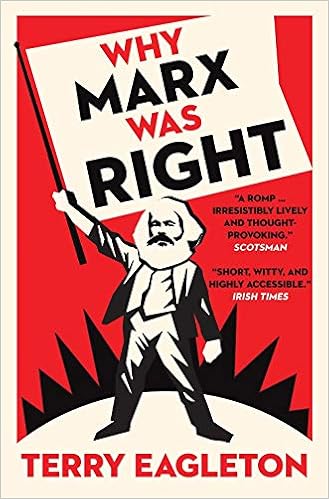
Why Marx Was Right

Free Download Why Marx Was Right
We believe that you will certainly be interested to check out Why Marx Was Right currently. This is a brand-new coming publication from a really famous writer in this globe. No complicated rule, no complicated words, and also no complicated resources. This book will appertain sufficient for you. This reading material has the tendency to be a day-to-day reading model. So, you can read it based on your requirements. Reading to the end finished can give you the huge outcome. As what other people do, numerous who reviewed a book by coating could acquire the advantage completely.
It is additionally what you could receive from the web link. You are very easy to obtain every little thing there, particularly for searching the book. Why Marx Was Right as one of the referred publication to check out when vacations is also supplied in the web site. We are the website that has lots of completed book kinds and styles. Numerous books from several countries are served. So, you will not be challenging to seek for more than a book.
To conquer your issues in seeking for the brand-new information, a publication will assist you ore. A lot more functions as well as even more visibility of guides to gathers could supply special points. Yeah, book could lead you for sure scenario. It is not just for the certain things and also communities. When you have actually decided just what type of books you want to read, you could begin to obtain guide from now. Currently, we will share the link of Why Marx Was Right in this website.
By saving Why Marx Was Right in the gizmo, the means you check out will also be much easier. Open it and also begin reviewing Why Marx Was Right, straightforward. This is reason we recommend this Why Marx Was Right in soft documents. It will not interrupt your time to get the book. In addition, the online air conditioner will certainly likewise reduce you to browse Why Marx Was Right it, even without going somewhere. If you have connection web in your workplace, residence, or gizmo, you can download and install Why Marx Was Right it directly. You may not additionally wait to receive guide Why Marx Was Right to send by the seller in various other days.
Review
"Each of the chapters of this erudite and breezy . . . tract begins with a series of assertions about Marx and Marxism, which Eagleton then proceeds to debunk . . . through excursions into philosophy, political practice and literary analogy. . . . Polemically charged and enjoyable."—Guardian"A lively defense. . . . Eagleton offers a richer, more complex and nuanced picture of the father of modern socialism. . . . Throughout, the author is witty, entertaining, and incisive."—Publishers Weekly"Eagleton is a compelling writer and raconteur. . . . He’s a witty, insightful thinker with a penchant for glib asides and wry dashes of humor. It’s probably the only book that makes references to Tiger Woods and Mel Gibson along with Charles Fourier and Michel Foucault."—Michael Patrick Brady, PopMatters"Reading a book by Terry Eagleton is like watching fireworks. . . . The list of Marxism's shortcomings is common coinage, and Eagleton offers convincing counterarguments."—Dennis O'Brien, Christian Century"Professor Eagleton covers the spectrum of critiques of Marxian ideas like only an actual critic of Marx could. As such, most of the rebuttals to these critiques are well contrived and incredibly sharp."—Greg Linster, Bookslut
Read more
About the Author
Terry Eagleton is distinguished professor of English literature, University of Lancaster, and the author of more than fifty books spanning the fields of literary theory, postmodernism, politics, ideology, and religion. He lives in Northern Ireland.
Read more
Product details
Paperback: 280 pages
Publisher: Yale University Press; Second edition (April 10, 2018)
Language: English
ISBN-10: 0300231067
ISBN-13: 978-0300231069
Product Dimensions:
5 x 0.9 x 7.8 inches
Shipping Weight: 6.4 ounces (View shipping rates and policies)
Average Customer Review:
3.7 out of 5 stars
61 customer reviews
Amazon Best Sellers Rank:
#389,281 in Books (See Top 100 in Books)
Highly recommended. This book is a necessary refresher of Marx's thoughts on philosophy, economics, politics and sociology by debunking most of more popular myths about Marxism.Published in 2011 just when the world was painfully recovering from the financial crisis of 2008 the book also describes and analyzes the connections between the current status of capitalism and the socio-economic marxian theses.
Nearing 60 years of age I don't have enough time to read every single thing Marx wrote that I have not already read. Mr. Eagleton seems fairly unbiased in his evaluation of Marx and his thoughts. A great place to begin the study of Marx and Marxism. Or, a great place to wrap up previous study.
A most necessary and important book about a most necessary and important man. As always Eagleton is a pleasure to read. Marx's real thought and writings have been so intellectually corrupted by rightwing idiots or left wing idealists it is beyond tragic. Eagleton does a great job at setting the record straight. Although he made a solid case he left a lot of intellectual artillery unused. I'm sure he had his reasons. Somebody should take this book and finish the job with even finer detail.
First of all, this work is critical given the dominant ideology demonizing Marx. The record need be set straight and Eagleton does so brilliantly. If you seek to know the true Marx, pick up this relatively short and thoroughly well written book. It could be the first step toward understanding what a better tomorrow for all of humanity could look like.
Cuts right thru post-war Washinton anti-socialist propoganda. Summarily to the bold and to the point.
Terry Eagleton's book "Why Marx was Right" is a skillfully written, sometimes almost poetic, mis-titled political polemic. A more suitable title would capture Eagleton's remarkably well-informed effort to demonstrate that so much that is so often found horribly wrong with common misconceptions of Marxism is sharply at odds with everything that Marx ever wrote. "Why Marx was Not Wrong" or "Marx Never Said That" would be more suitable titles, but neither grabs the prospective reader's attention or has, for many, the shock value of "Why Marx was Right." Nevertheless, the primary purpose of Eagleton's book is to set the record straight and make clear that much of the nonsense often attributed to Marx represents a misreading or, more likely, a failure to read what Marx wrote, sometimes with Engels as like-minded co-author, over the course of his lifetime.Commonly, when an author comes to Marx's defense he or she is met with strident cries that when Marxism has been tried it has met with murderously disastrous results. Moreover, esteemed scholars such as Leszek Kolakowski and Eugene Genovese , Marxists in their youth, later concluded, no less polemically than Eagleton, that efforts to establish socialist societies were doomed not only to fail, but to almost certainly result in the tyranny and mass murder that befell Stalin's Soviet Union and Mao's mainland China. However, author's with these mid-career changes in mindset are typically loathe to acknowledge that Marx would have emphatically judged that Russia and its underdeveloped neighbors in the first decades of the 20th Century, and China in the late 1940's were among the poorest choices for a revolution that would have led to establishment of effective socialist societies.Marx's view of the conditions necessary for creation of socialism was that it be established in developed societies, not poor peasant domains ruled by a parasitic royalty or collections of barbaric war lords. In other words, in so far as Marx had a rudimentary prescription for development of a socialist society, it followed a requisite period of growth, industrialization, innovation, and diversification that typifies a mature capitalist social system. For better or worse, following Eagleton, the profit motive and its developmental outcomes necessarily laid the groundwork for emergence, gradual or with revolutionary suddenness, of a socialist society. Otherwise, there was too little to build on and too little to foster the development of human potential.Notice that in addition to admiration for the innovative and economically productive nature of capitalism, according to Marx the transition to socialism need not involve bloodshed. It may or may not, but the decisive factor was recognition on the part of the population -- not a revolutionary elite, but citizens in general -- that capitalism had reached a point where the unending pursuit of capital accumulation was more destructive than beneficial. For example, Anthony Giddens reports in his recent book Turbulent and Mighty Continent that fully half of the world's available capital is not invested in productive activity, the kind that would create jobs and promote social and economic development. Has capitalism backed off from what it has always done best? Is this evidence of its obsolescence?Given the foregoing observations, it's difficult to avoid thinking in terms of class, a concept once dismissed in the West as obsolete and reckoned in strictly cultural terms. It is clearly the case, however, that the capitalist mode of production is based on two fundamental classes, the one that owns and controls the means of production and finance, with members of the other, much larger class, working in whatever occupational positions capital makes available. Eagleton finds it useful, moreover, to recognize an intermediate middle class which, for the most part, is made up of members of the working class who are doing particularly well, at least for the short term. But the basic formulation is capital and proletariat.The questions that usually follow an account such as this unmistakably imply that Marx was a leveler who wanted to create a world where any differences among people, especially with regard to material resources, were summarily eliminated. However, Marx never wrote anything to suggest that he was a leveler or that he wanted to establish person-to-person homogeneity with regard to much of anything. In fact, you'll find just the opposite if you read his essay on "Primitive Communism" in the "Economic and Philosophical Manuscripts of 1844."Marx construed people, at birth, as possessing enormous potential for developing a broad range of talents. No two people were the same, and given that we have different interests and capabilities, the resources used by one would inevitably be more or less and different from the resources used by another. What Marx wanted was a society wherein self-actualization was more than just a quaint psychological concept from the 1940's that was kept alive by the authors of textbooks for undergraduates. Of course Marx wanted to eliminate the class-based society intrinsic to capitalism, but elimination of all material and other differences was sharply at odds with his perspective.As one who assumed that we are all capable of producing ourselves in a variety of satisfying ways through the expenditure of intelligence, talent, and effort according to our natural capabilities, one might surmise that we have the key to Marx's understanding of human nature, something Marx termed "species being." This is the position Eagleton takes, and he develops it beautifully. I think, however, that Eagleton goes too far when he denies that Marx thought that human beings at birth were cognitively blank slates or tabula rasa.As a materialist, meaning one who gives priority to experiential determination of the kind of people we find in any society, I think it makes a good deal of sense to invoke the blank slate metaphor. The potential for growth and development that Marx saw in each of us was promoted or thwarted, enhanced or diminished, realized or undercut by the social circumstances in which we lived. Capitalism created people whose life experiences made them combative, greedy, adversarial, demoralized, unnaturally limited ... simply by functioning according to its intrinsic, observable characteristics. A socialist society that did not provide a context within which human development was relatively unfettered by economic constraints was socialist in name only. Still, in spite the unflattering outcomes attributed to capitalism, it remained a necessary prerequisite to socialism. Capitalism provided socialism with its material foundation. It was only when the ethos of capitalism was overcome by a socialist point of view and socialist values that socialist society became possible.But how does one imbue men and women with a socialist perspective? The very term "socialist," much as with "communist," has become in the U.S. a laughably profane political epithet. Only when everyday experience with the material world persuades the citizenry that capitalism has run its course, constrains productivity, and makes a good life ever harder to achieve will socialism become a tenable alternative to things as they are.Given the current contradiction between prevailing anti-socialist mindsets in spite of deteriorating material circumstances, one can see why a transition from capitalism to socialism is so often dismissed as utopian nonsense. This, too, however, is something that Marx came to understand very well, and may help to explain why he never wavered in his commitment to the view that the nature of a genuinely socialist or communist society could not be precisely foreseen but had to emerge as a consequence of concrete historical development. In this and an impressive variety of additional ways, Eagleton gives compelling substance to the question "Was ever a thinker so travestied?"
Simply dazzling.
great book! clearly debunks many intentionally planted misconceptions that the john birchers and southern white plantation owners may not want you to know about.
Why Marx Was Right PDF
Why Marx Was Right EPub
Why Marx Was Right Doc
Why Marx Was Right iBooks
Why Marx Was Right rtf
Why Marx Was Right Mobipocket
Why Marx Was Right Kindle
0 komentar:
Posting Komentar